
Uncategorized
35 Minute
How to Create a High-Converting Digital Marketing Campaign for UAE Businesses


Most advice on digital marketing campaigns in Dubai and the wider UAE falls into one of two buckets: a generic global playbook with “Dubai” added to the title, or a trends list — AI, hyper-localization, channel shifts — with no actual process for turning that into a campaign. Knowing what’s trending doesn’t tell you how to build one from scratch.
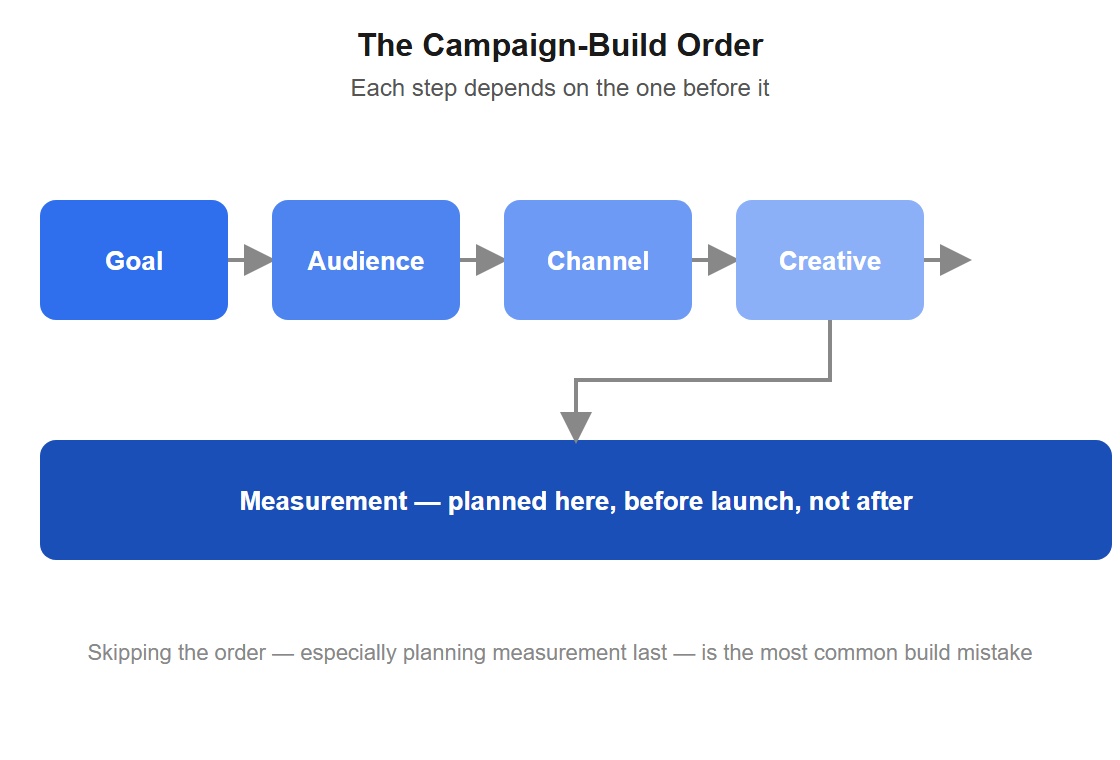
This guide is the execution framework. It starts with the single most common failure pattern in digital marketing campaigns — picking channels before defining a goal. From there it works through audience, channel mix, creative, budget, and measurement, in the order that actually produces a high-converting result. If you want the broader trend landscape first, our digital marketing strategy trends guide covers that. This post is the step-by-step build that follows it.
Key Takeaways
- Start with one measurable goal, not a channel list — channel, creative, and budget all follow from the goal, not the reverse.
- UAE digital ad spend is projected to reach $2.64 billion in 2026, growing 15.2% year-over-year to roughly $4.30 billion by 2029 (Research and Markets, UAE Digital Ad Spend Business Report 2026, 2026) — more competition for the same audience, which raises the cost of a poorly planned campaign.
- The UAE has 23.0 million active mobile connections against a population of roughly 10 million — 202% of the population (DataReportal, Digital 2026: The United Arab Emirates, 2026) — making mobile-first execution a planning requirement, not a technical afterthought.
- Plan what you’ll measure before you launch, not after — the most common campaign mistake is deciding on KPIs once the campaign is already live.
Start With One Measurable Goal, Not a Channel List
Campaigns that start with “let’s do Google Ads and Instagram” instead of a specific, measurable goal are the most common failure pattern in digital marketing. The goal determines everything downstream: which channels make sense, what the creative needs to say, how much budget is justified, and what “success” actually means at the end.
A workable goal is specific and measurable — “50 qualified leads per month at under AED 150 cost-per-lead,” not “grow our brand.” Four goal types cover most campaigns, and each implies a different channel mix and definition of conversion:
| Goal Type | What “Converting” Means | Typical Channel Fit |
|---|---|---|
| Lead generation | Cost-per-lead, lead quality | Google Ads, LinkedIn, Meta lead forms |
| Direct sales | Return on ad spend | Google Ads, Meta, retargeting |
| Brand awareness | Reach, engagement, brand lift | Meta, TikTok, video |
| App installs / sign-ups | Cost-per-install, activation rate | Meta, TikTok, app-install campaigns |
Picking the goal first is what makes every later decision faster, not slower. It removes the debate over “should we be on TikTok” by making the answer depend on whether TikTok actually serves the goal — a brand-awareness goal might say yes; a B2B lead-generation goal probably says no.
Define Your Audience Before Picking Channels
Channel choice should follow audience behavior, not the reverse. Before naming a single platform, get specific about who the campaign needs to reach. Three things matter most: their language (English, Arabic, or both), their device (the UAE is an overwhelmingly mobile-connected market), and whether the buying behavior is B2B or B2C. Each implies a different channel logic.
The UAE’s mobile-connection density is a genuine planning input, not background trivia. Mobile-first design means a landing page, checkout flow, or lead form built for a phone screen first, not adapted from a desktop layout afterward. There were 23.0 million active cellular mobile connections in the UAE at the end of 2025 (DataReportal, Digital 2026: The United Arab Emirates, 2026). That’s 202% of the total population, reflecting how many residents carry multiple connected devices. A campaign that isn’t built mobile-first is fighting the market it’s trying to reach.
If a meaningful share of the target audience searches or browses in Arabic, note that now — it changes the creative brief later, and it’s a much easier fix at the planning stage than after assets are already produced.
Choose the Right Channel Mix for the UAE Market
No single channel serves every goal, and most effective campaigns in this market combine several rather than relying on one. Google Ads captures high-intent search traffic — people already looking for what you offer. Meta (Facebook and Instagram) works best for awareness and discovery. LinkedIn is the default for B2B targeting. TikTok reaches younger demographics with high engagement. WhatsApp Business is worth naming explicitly in a UAE context — it’s a genuinely regional channel for direct customer communication that generic global playbooks tend to skip.
On Google Ads specifically, current benchmarks give a useful sanity check. The average click-through rate across all industries is 6.64%, and the average conversion rate is 8.18% (WordStream, Google Ads Benchmarks 2026, 2026). That figure comes from a WordStream analysis of 13,474 US-based search campaigns running between April 2025 and March 2026 — US-based, not UAE-specific. Treat it as a directional benchmark to compare your own numbers against, not a guarantee, until you have campaign data of your own instead.
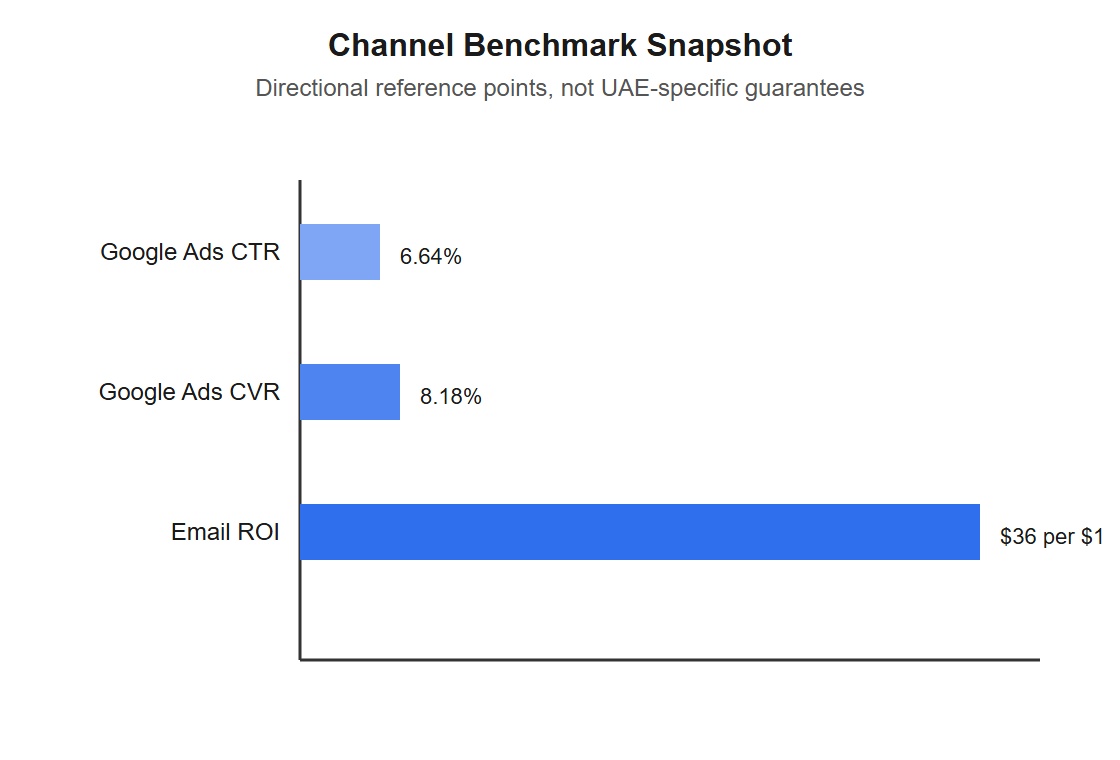
Email deserves a place in the mix even though it’s less discussed than paid social. Litmus reports email marketing driving $36 in return for every $1 spent (Litmus, Email Marketing ROI, retrieved 2026). That’s a global figure, not UAE-specific, but among the highest ROI of any channel measured. It’s rarely the primary channel in a campaign, but it’s one of the cheapest to add to a multi-channel mix.
Build Creative That Fits the UAE Market, Not a Generic Template
Hyper-localized, bilingual creative outperforms translated or generic global creative in this market. That means planning dual-language content from the creative brief stage, not translating English assets after the fact. It also means matching the visual production quality the market expects — Dubai and Abu Dhabi audiences see a lot of high-production brand content daily.
If branding or content production isn’t handled in-house, our branding and content services cover exactly this stage of campaign development.
Set a Budget That Matches the Goal, Not a Round Number
Budget should be derived from the goal and channel mix decided above, not picked as an arbitrary round figure. A campaign chasing 50 leads a month needs a budget sized to the target cost-per-lead across the chosen channels — working backward from the goal, not forward from “what feels reasonable.”
The broader UAE market context is worth knowing when sizing a budget. Digital ad spend in the UAE is projected to reach $2.64 billion in 2026, a 15.2% increase year-over-year (Research and Markets, United Arab Emirates Digital Ad Spend Business Report 2026, 2026). It’s forecast to grow to roughly $4.30 billion by 2029, a 17.7% compound annual growth rate. That growth means more advertisers competing for the same inventory, which tends to push costs up over time. It’s a reason to lock in a clear goal and budget discipline now, rather than scaling spend reactively later.
Worth noting: Most campaign-planning content treats budget as the first decision — “how much do we have to spend” — rather than the last one. Sizing budget after the goal and channel mix are set is a small ordering change. It avoids the common trap of a budget that’s too small for the channels chosen, or spread too thin across too many of them.
Plan Measurement Before You Launch, Not After
The single most common campaign mistake is deciding what to measure once the campaign is already live. Measurement should be locked in during planning, tied directly to the goal set in step one. A lead-gen campaign measures cost-per-lead and lead quality. A sales campaign measures return on ad spend. An awareness campaign measures reach and brand lift. That’s three different definitions of “high-converting,” not one universal metric.
Set up UTM tracking and conversion tracking before the first ad goes live, not after the first report is due. A campaign that launches without a measurement plan usually ends up reporting whatever data happens to be easy to pull — impressions, clicks. That’s rarely what actually mattered when the goal was set.
Common Mistakes That Kill Conversion Rates
A short list of the specific, checkable mistakes that most reliably tank campaign performance:
- No clear goal before launch — every downstream decision (channel, creative, budget) ends up arbitrary.
- Single-channel dependency — relying on one platform when the audience and goal call for a mix.
- Generic, non-localized creative — translated rather than genuinely bilingual, missing the cultural fit this market rewards.
- No pre-launch measurement plan — reporting whatever’s easy to pull instead of what the goal actually required.
- Mobile-unfriendly landing pages — a real cost in a market this mobile-connected.
Frequently Asked Questions
How much does a digital marketing campaign cost in the UAE?
It depends entirely on the goal, channel mix, and competitiveness of the audience — there’s no single “typical” campaign cost. Size the budget from the target cost-per-result (cost-per-lead, cost-per-sale) across the chosen channels. Use current channel benchmarks, like Google Ads’ average 8.18% conversion rate, to sanity-check the numbers a proposed budget implies.
How long does it take to see results from a digital marketing campaign?
It varies by channel and goal. Paid channels like Google Ads and Meta can generate initial traffic and leads within days. Reliable performance data — enough to judge whether a campaign is actually working — usually takes several weeks of consistent spend. Organic and content-driven channels take longer to show results but tend to compound over time.
Should I run a campaign myself or hire an agency?
It depends on in-house bandwidth, channel expertise, and how much time you can dedicate to the measurement and iteration this framework calls for. If you’re evaluating outside help, our guide to choosing a digital marketing company in Abu Dhabi covers that decision in detail.
Which digital marketing channel works best for UAE businesses?
There’s no universal answer — it depends on the goal and audience defined in the first two steps of this framework. Google Ads suits high-intent search behavior, Meta suits awareness and discovery, LinkedIn suits B2B, and WhatsApp Business suits direct customer communication. Most effective campaigns in this market combine several rather than relying on one.
Conclusion
A high-converting digital marketing campaign in the UAE starts with a measurable goal, not a channel list. From there, audience defines channel choice, and channel and audience shape the creative. The goal and channel mix size the budget, and measurement gets planned before launch — not bolted on afterward. Skip that order, and even a well-funded campaign in a growing market ends up spending against the wrong metrics.
If you’d rather work through this framework with a team than build it alone, contact Social Connexions to book a consultation and we’ll walk through what a high-converting campaign would actually look like for your business. You can also read more about us and how we approach campaign work before reaching out.
Tagged with :